Wednesday, November 20, 2013

Pop-Up Planning: New Methods for Transforming the Public Process

popupmango1
Calling all urban planners and designers of the public realm! It’s time to turn the traditional planning process on its head! Are you looking to push the envelope beyond the traditional community workshop with its rows of chairs facing the front, unimaginative PowerPoint presentations at the lectern, and weary audiences dissatisfied with the process? Want to liven up the planning process? Well pop a ‘Pop-Up’ into it and see what happens.
The City of Santa Monica and Melendrez - Los Angeles-based urban designers – along with help fromCommunity Arts Resources, brought the idea of pilot and pop-up, tactical urbanism into the planning process, with a festival/workshop/installation called Pop-Up MANGo, the first event of its kind in the region. Pop-Up MANGo gave citizens an opportunity to see and evaluate public realm improvements during the planning process, hands-on. Pop-Up MANGo – named after the Michigan Avenue Neighborhood Greenway- showcased temporary installations of possible improvements for a new Greenway corridor such as: traffic calming devices, traffic circles, chicanes, curb extensions, enhanced landscaping, mini-parks, and places for neighbors to gather.
popupmango2
The 21st Century has been marked by a trend of temporary and DIY urbanism, “popping-up” in cities around the US, from New York’s temporary removal of cars in Times Square, to parklets and plazas carved from residual space in the streets of San Francisco and Los Angeles. Urban dwellers are increasingly carving out, demanding, and being drawn to these neat and quirky creative spaces, in a bottom-up approach to urban transformation. And with NACTO’s recent release of their great Urban Street Design Guide, which includes guidelines for handfuls of these sorts of improvements, it looks like these trends will increasingly be codified, embraced, and standardized over the coming years.
PopUP MANGo translated this idea of immediate, fun, temporary, and quirky pop-ups into the planning process itself, with demonstrations of potential improvements. The PopUp MANGo event was light hearted and community-oriented with local musicians, food trucks, booths with local organizations, arts activities for children, and a ‘passport’ program that guided people through the installations and gauged feedback. There were over 400 people in attendance and the feedback gathered is now helping the planning team craft a locally-rooted and locally-vetted design for the potential new Greenway through the City.
popupmago3
Do-It-Yourself
There likely will be more and more of these pop-up planning sessions, ‘popping up’ around the nation… Want to do something like this in your own community? Pop-Up MANGo’s toolbox consisted of mostly donated items:
  • Straw wattle to demarcate the edges of the installations
  • Plants and trees to fill them in
  • Giant flower stencils painted with colorful (and temporary) spray chalk
  • Traffic signage for safety
Think local: Pinpoint things that are unique to the neighborhood to make the event distinctive and place-specific. Santa Monica is a creative city that values art and community collaboration; the design team used big artistic stencils and the help of community volunteers to give the event a creative and community vibe. The team also reached out beforehand to many local organizations to vet designs and event strategies. Santa Monica Police Department, Santa Monica Spoke, Santa Monica Walks, and Meals on Wheels West were all present. A kids’ art workshop making bike reflectors was held as part of the event, in collaboration with the Santa Monica Museum of Art. The event itself took place in the street right on the alignment so that people who lived along it could easily participate.
popupmango4
Think fun: The days of humdrum planning processes should be a thing of the past. Think about what can transform your standard public workshop into a real event for the community; an Experience with a capital ‘E.’ Local performers, special cuisine, etc. Know someone who can install a temporary piece of art that’s interactive? Have a friend in the community who is a one-man band? Get them there! Having free food as an incentive worked at Pop-Up MANGo, where grant funding allowed budget for lunch vouchers for participants who visited all six stations.
Think stats: The beauty of ‘PopUp Planning’ is that you can get a ton of people to participate in the planning process and it can be a lot more rewarding than traditional processes since participants can see and feel improvements first hand. Be prepared to gather information in a thoughtful way so that you can use it to build momentum and make decisions in the planning process. At Pop-Up MANGo participants filled out questionnaire comment cards which allowed the team to rank community priorities quantitatively. Don’t forget to follow up afterwards with participants and community members to showcase how the planning process directly impacted design and planning decisions.
The streets come alive!
Want more information? Contact Jason Kligier or Amber Hawkes
Amber Hawkes is an urban designer at Melendrez in Los Angeles and part of the faculty at the UCLA Luskin School of Public Affairs Urban Planning Department.

Wednesday, October 30, 2013

Towards a Resource Centric Design

U.S. Population per square mile
In the current economic circumstances, planners and designers are charged with the difficult task of doing more with less. By not preventing the same mistakes and misconceptions made by the Modernist movement of the second quarter of the 20th century, the design community has, over the past couple of decades, reduced planning and design to a formulaic and often homogeneous approach in the urban and suburban fabric. Their method: create a standardized design process that results in a standardized appearance and function that ultimately relates to a uniform and familiar significance. Objects and landscapes are normalized via the propagation of a secure perspective. The environment is something to be consumed.

We, as a nation, are privileged to have a large, mostly temperate land mass; a diverse and relatively small population base; and a rich and plentiful resource base. However, our inability to address the implementation of an integrated design ethic at the regional level, has, in large part, contributed to planning and design that does not address energy conservation and resource consumption at the macro level. Sustainability is mere language, if there is no large-scale view, in real-time, of the energy flows that drive all of earth's systems. Resource modeling at the regional scale is paramount to understanding how basic, yet diverse, concepts like carrying capacity, soil stability and traffic volumes relate to events and objects at the end-user level: healthy communities, sound construction and thoughtful resource conservation.


The resulting concept is a region-specific system of detailed design decisions that are rooted in a firm understanding of the natural processes that support all living things, as well as the artificial processes that mediate the natural environment for human use. The following images attempt to illustrate a simple environmental motive: water and petroleum conservation as related to the decentralization of conventional agriculture in favor of a localized food system.


The colors range on the maps are normalized to be relative to each other and the color scale is simple: The darkest red means high and the darkest green means low with the scale of colors in between indicating the full range respectively. 


Total farmland as a percentage of total land
Acres of corn harvested
Kilograms of the agrochemical Atrazine applied per acre
Percentage of farms owned by a family or individual
Mean precipitation
This series of maps illustrates a simple spatial concept that relates to a multitude of complex implementation strategies. The goal of this particular example of a Resource Centric Design strategy is the decentralization of conventional agriculture in favor of sustainable, or even surpassable, local food systems. In essence the maps here, produced from various but respected data sources, speak to the inefficient resource consumption and potential chemical abuses of an Industrial Agricultural System and its dependence on fossil fuels and unsustainable water management practices. This single perspective of a much more complex problem could, in part, lead to the formulation of an integrated design ethic that could holistically protect sensitive watersheds, activate local economies and reduce petroleum consumption significantly when applied at the regional level.

For some recent news on the agrochemical Atrazine Click Here!

Source: USDA, ESRI, US Census

Posted By William Aultman@ EcoUrbanity

Tuesday, October 29, 2013

Urban Water Cycle: The Urban Infleuence on our Most Valuable Resource

Graphic courtesy of The City of Auckland

One of the most environmentally damaging aspects of urban life is the high percentage of impervious surfaces in and around most metropolitan regions. These conditions (as seen in the nice graphic above) reduce aquifer recharge and contribute to reduced stream flow or, in the case of heavy rains, flooding. The world's fresh water reserves are at an all time low and rapid development coupled with poor water management practices are creating what will become a global water crisis. The price of one barrel(US, petroleum) of oil is floating somewhere around $100.00, whereas the average price of one barrel(US, petroleum) of water is somewhere around $0.25. Wow...! What a bargain considering humans cannot live for much more than a few days without water, but we certainly do not need petroleum to be able to biologically function. I wonder what will happen when tap water is as expensive as oil? Bottled water already is...

For some insight on an urban area trying to address this issue...

For some interesting facts on the price of water in the US...

Post submitted by William Aultman@ EcoUrbanity

Friday, October 25, 2013

MoMA’s “Uneven Growth: Tactical Urbanisms for Expanding Megacities” to launch Oct. 26

MoMA will launch the first workshop for "Uneven Growth: Tactical Urbanisms for Expanding Megacities" starting Saturday, Oct. 26 at MoMA PS1 in New York City.

In this workshop series, six interdisciplinary teams will propose innovative ways of how to perceive urban growth as a response to the disproportionate expansion and its potential consequences in six of the world's metropolises. The workshops will also open these pressing issues to public discussion.

The proposals will then be exhibited at the MoMA PS1 in November 2014, the second phase of the Uneven Growth initiative.


Morro do Alemão, Rio de Janeiro, 2012. Photograph by Pedro Rivera, RUA Arquitetos.

From the MoMA press release:

"The Museum of Modern Art announces a 14-month initiative to examine new architectural possibilities that address the rapid and uneven growth of six global metropolises: New York, Rio de Janeiro, Mumbai, Lagos, Hong Kong, and Istanbul. Organized by Pedro Gadanho, Curator, Department of Architecture and Design, Uneven Growth: Tactical Urbanisms for Expanding Megacities enlists six interdisciplinary teams of international architecture and urbanism scholars, experts, and practitioners to participate in a series of workshops that begin on October 26, 2013, with each team focusing on a specific city. The resulting proposals will be exhibited at MoMA from November 22, 2014, to May 10, 2015.Uneven Growth is organized by MoMA in collaboration with the Museum of Applied Arts (MAK), Vienna.

'In 2030, the world’s population will be a staggering eight billion people. Of these, two-thirds will live in cities, and most will be poor and with limited resources. This unbalanced growth will be one of the greatest challenges to societies across the globe,' said Mr. Gadanho. 'City authorities, urban planners and designers, and economists will need to join forces in an attempt to avoid a major social and economical catastrophe, working together to ensure that expanding megacities will be habitable. Uneven Growth will enable MoMA to take a leadership role in addressing this challenge.'

For the workshop phase of Uneven Growth, teams are challenged to create proposals that offer new and inventive ways of thinking about the growth of cities. The design teams develop projects under the curatorial and critical guidance of MoMA’s Department of Architecture and Design, and an advisory board that includes such leading figures as Saskia Sassen, David Harvey, Ricky Burdette, Neil Brenner, Nader Tehrani, Michael Sorkin, Marc Angélil, Teddy Cruz, and others.

The workshop phase launches on Saturday, October 26, 2013. Following an initial workshop in the VW Dome at MoMA PS1, workshops are also planned at The Value Factory in Shenzhen, China, in December 2013, and at MAK, in Vienna in June 2014. These events will produce responses to the theme, while bringing the larger discussion to the general public. For the second phase of Uneven Growth, MoMA will present an exhibition of the resulting proposals, beginning on November 22, 2014. At the center of the exhibition will be design visions for the near future of the selected cities, comprising drawings, renderings, films and animations to be produced by the six teams during the workshop period. The final result will be an exhibition catalogue that brings together each of the proposals and groundbreaking essays about the subject..."

Thursday, October 24, 2013

Global ecosystems ‘face collapse’


from BBC World News Service

Current global consumption levels could result in a large-scale ecosystem collapse by the middle of the century, environmental group WWF has warned.

The group’s biannual Living Planet Report said the natural world was being degraded “at a rate unprecedented in human history”. Terrestrial species had declined by 31% between 1970-2003, the findings showed. It warned that if demand continued at the current rate, two planets would be needed to meet global demand by 2050. The biodiversity loss was a result of resources being consumed faster than the planet could replace them, the authors said. They added that if the world’s population shared the UK’s lifestyle, three planets would be needed to support their needs.


The nations that were shown to have the largest “ecological footprints” were the United Arab Emirates, the United States and Finland. Paul King, WWF director of campaigns, said the world was running up a “serious ecological debt”. “It is time to make some vital choices to enable people to enjoy a one planet lifestyle,” he said. “The cities, power plants and homes we build today will either lock society into damaging over-consumption beyond our lifetimes, or begin to propel this and future generations towards sustainable one planet living.”


The report, compiled by the Zoological Society of London (ZSL) and the Global Footprint Network, is based on data from two indicators:


· Living Planet Index - assesses the health of the planet’s ecosystems


· Ecological Footprint - measures human demand on the natural world


The Living Planet Index tracked the population of 1,313 vertebrate species of fish, amphibians, reptiles, birds and mammals from around the world. It found that these species had declined by about 30% since 1970, suggesting that natural ecosystems were being degraded at an unprecedented rate. The Ecological Footprint measured the amount of biologically productive land and water to meet the demand for food, timber, shelter, and absorb the pollution from human activity. The report concluded that the global footprint exceeded the earth’s biocapacity by 25% in 2003, which meant that the Earth could no longer keep up with the demands being placed upon it. The findings echo a study published earlier this month that said the world went into “ecological debt” in October of 2006. The study by UK-based think-tank New Economics Foundation (NEF) was based on the Ecological Footprint data compiled by the Global Footprint Network, which also provided the figures for this latest report from the WWF.


‘Large-scale collapse’


One of the report’s editors, Jonathan Loh from the Zoological Society of London, said: “[It] is a stark indication of the rapid and ongoing loss of biodiversity worldwide. “Populations of species in terrestrial, marine and freshwater ecosystems have declined by more than 30% since 1970,” he added. “In the tropics the declines are even more dramatic, as natural resources are being intensively exploited for human use.” The report outlined five scenarios based on the data from the two indicators, ranging from “business as usual” to “transition to a sustainable society”.


Under the “business as usual” scenario, the authors projected that to meet the demand for resources in 2050 would be twice as much as what the Earth could provide. They warned: “At this level of ecological deficit, exhaustion of ecological assets and large-scale ecosystem collapse become increasingly likely.”


To deliver a shift towards a “sustainable society” scenario would require “significant action now” on issues such as energy generation, transport and housing.

Alternative Energy for Sustaining Human Life

Winston Churchill once said that Americans will always do the right thing... as a last resort! Though that may be a bit pessimistic, sadly, there is probably some logic to that statement. An environmental metaphor that one might draw from Mr. Churchill's quip is one of resources and consumption, or, supply and demand, if you like economics. The massive urban developments in the middle and far east have out-scaled anything westernized nations have attempted, and they are making some advancements in methods to sustainably create and maintain these new urban areas. However, the lifestyles of the westernized societies that these countries emulate, even if just partially, are not responding fast enough to the unfortunate reality of the world's dwindling resource availability. The scale of development worldwide, coupled with a continuous dependency on fossil fuels, poses an interesting problem that there is no clear, single answer to. How does the world allow economic development and cultural potential while at the same time restricting the over consumption of remaining resources? A possible partial solution (in addition to first world countries drastically reducing consumption) may be a renewable energy superstructure for rapidly urbanized areas. It would comprise of a matrix of renewable energy facilities geographically placed for maximum production and minimum impact. Any of the individual modes of production could in no way support the entire area, but, as a part of a larger superstructure, the pieces form a comprehensive "Energy Web" that does not completely rely on any single form of production.

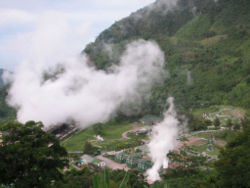
Geothermal energy is provocative and seemingly endless, even without imagining drilling into the center of the earth. Its applications, though difficult to harness in some cases, are consistently proving to offer reliable means to collect or generate energy. From constant ground temperature to volcanic steam vents the fact that the majority of the earths mass is a molten core of rock and metal is hard to ignore.


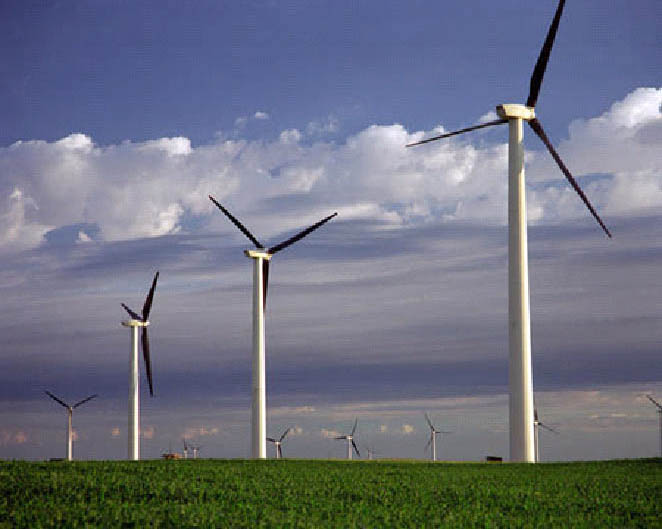
With increased technology and awareness, wind generated electricity is rapidly becoming a much more viable means to power our lives. The use of a meteorological phenomena to generate motion or electricity is not a new idea, but with current advancements in design and policy based initiatives wind power will play a huge factor in the global energy market.

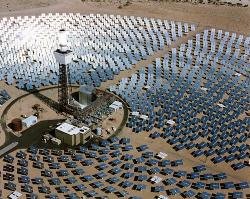
The sun is responsible for the existence of all life on Earth. All of the planet's growing systems assimilate everything from a small star at the heart of our solar system. Unfortunately solar technology has been slow to develop into a widespread energy harvesting method for reasons that range from the expense of solar panels to the suppression of solar advocacy and technology by conventional energy lobbyist.


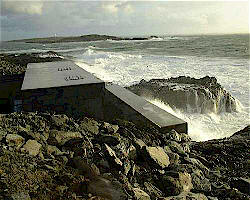
Hydroelectric energy production has, like wind power, been around for a long time. However, the large scale installation of dams worldwide have proven to be one of the most disruptive and damaging of human efforts to terrestrial ecosystems. But like free flowing rivers, the undulations of the worlds oceans have untapped and practically endless applications for free energy production. This could be applied on a large scale in most coastal areas and even within sensitive habitat.


Through the quest for self importance and universal convenience, the resources that were once so plentiful just a century or two ago are now scarce commodities. It seems now, just as the early Buddhist used the four great elements to explain and understand their earthly suffering, modern humans have reinterpreted their perspectives of earth, air, fire and water in efforts to gain ground in the global scramble for survival.

Post submitted by W. A. Aultman / WilliamAultman@EcoUrbanity